Home / Serviços / Radiation therapy

Radiation therapy

Treatment of oncological diseases and certain benign pathologies with high-precision radiation.

Advanced technology, multidisciplinary teams and personalised treatment in collaboration with leading hospitals.

Radiation therapy

What is Radiotherapy?

Radiotherapy is one of the fundamental pillars of cancer treatment today. It is an oncological therapy based on the use of ionising radiation to destroy tumour cells, trying to preserve the healthy tissues that surround them as much as possible. Thanks to technological advances and the coordinated work of specialised teams, radiotherapy is now an increasingly precise treatment. safe and effective.

Our mission is to offer quality care to cancer patients, through a committed multidisciplinary team.

  • Non-invasive treatment
  • High precision and millimeter control
  • Preservation of healthy organs and tissues
  • Compatible with other cancer treatments
  • Improving local disease control
1

Cure

Whenever possible, using high-precision techniques.

2

Control

Slow the progression of the disease when it cannot be eradicated.

3

Calm down

Relieve symptoms, especially pain, in palliative scenarios.

Pathologies

What pathologies do we treat with radiotherapy?

Treatments with personalized protocols, from solid tumors to painful musculoskeletal pathologies treated at low doses.

Common Cancer Tumors

Radical treatment or combined with surgery and chemotherapy.

  • Breast cancer
  • Prostate cancer
  • Lung cancer

Other cancer tumors

Specific locations with advanced protocols.

  • Digestive tumors
  • Gynecologic tumors
  • Head and neck
  • Central nervous system

Palliative treatments

Symptomatic relief in advanced oncological disease.

  • Cancer pain
  • Spinal cord compression
  • Painful bone metastases

Benign pathologies

Low-dose anti-inflammatory radiation therapy.

  • Osteoarthritis · Painful shoulder and elbow
  • Plantar fasciitis · Trochanteric bursitis
  • Refractory keloids
  • Thyroid ophthalmopathy

Can’t find your pathology?

Each case is unique — our medical committee evaluates the clinical indication individually.

Request Evaluation
Treatment

Types of Treatment Available

Each treatment is planned individually. Our team selects the most appropriate technique according to the type of tumour, its location and its general health.

External radiation therapy treatment in which radiation is delivered through a linear accelerator located outside the patient’s body and precisely targeted at tumor volume. Planning is carried out using CT images, which can be combined with MRI or PET-CT, allowing the position and three-dimensional shape of the tumour to be defined in order to accurately target the treatment fields and optimise the protection of healthy tissues.

An advanced radiation therapy technique that modulates the intensity of radiation using a multileaf collimator (MLC), which moves simultaneously during treatment delivery. This allows the dose to be adapted with great precision to the shape of the tumour, higher doses to be delivered to the tumour area and to better protect adjacent healthy tissues, minimising their exposure to radiation.

An advanced radiation therapy technique, similar to IMRT, in which the accelerator rotates around the body during treatment. It dynamically and simultaneously uses multi-leaf collimators (MLC), 360º rotation, variable dose rate and variable speed of the 360º rotation and the rotating structure of the accelerator, allowing the dose to be modeled with great precision on the tumor volume. In addition, it reduces treatment time, improving patient comfort and reproducibility of the procedure.

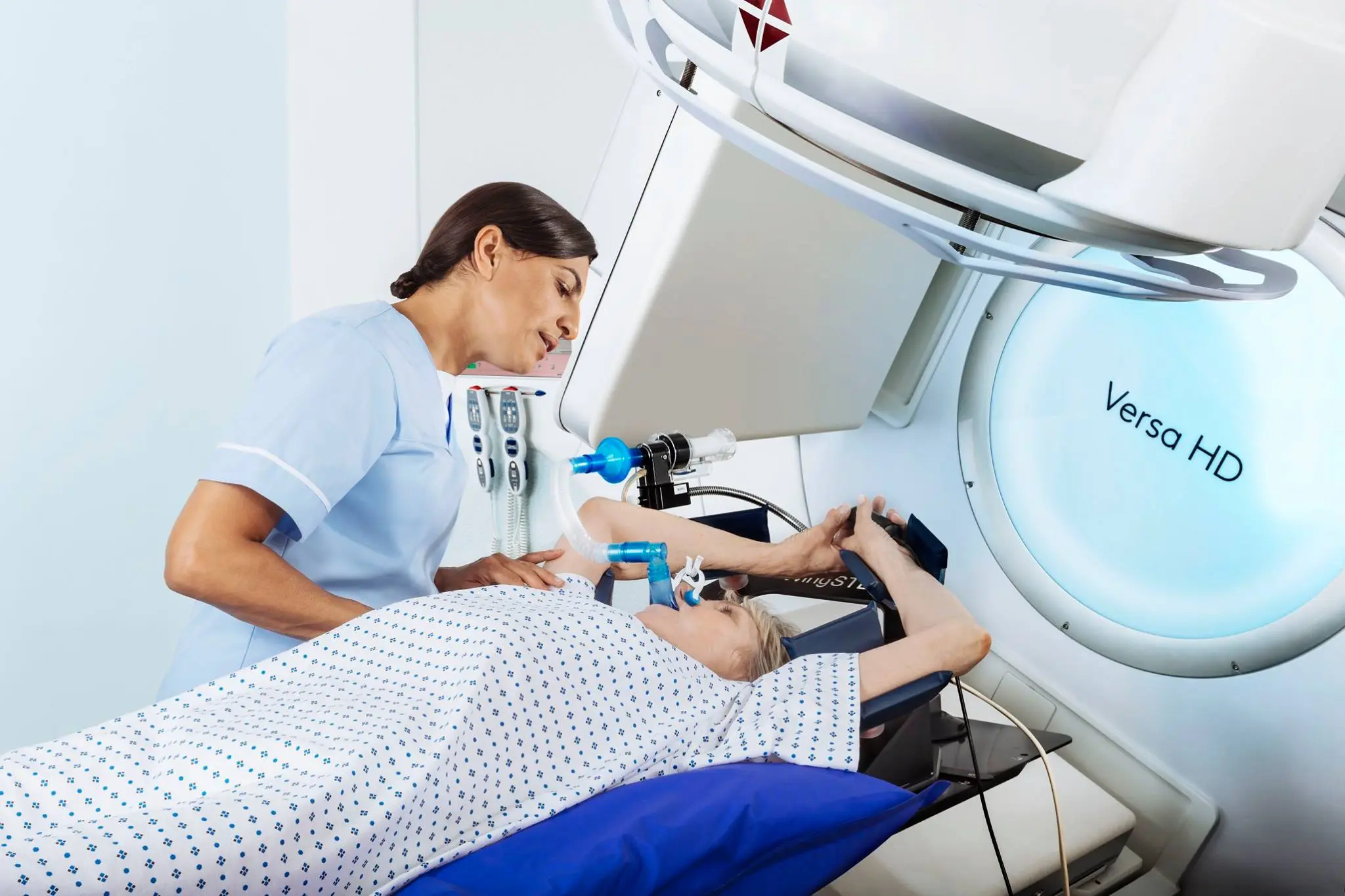
Radiotherapy technique that uses real-time 3D and 4D images to ensure greater precision in patient positioning before and during each session. By means of three-dimensional imaging, usually kV-CBCT, it is possible to verify and adjust the tumour volume exactly, minimising treatment margins, reducing radiation to healthy tissues and allowing higher doses to be delivered safely.

We use real-time imaging to make sure the radiation gets exactly where it needs to go, every session.

High-precision, non-invasive radiotherapy treatment that delivers high doses in just a few sessions, with minimal involvement of surrounding healthy tissues. It uses advanced planning and guided imagery to accurately locate the tumor and monitor its physiological movements during treatment.

Internal radiotherapy treatment that uses permanent radioactive seeds, usually iodine-125, implanted directly into the prostate using ultrasound-guided needles. The seeds continuously release low-dose radiation onto the tumor, minimizing exposure to surrounding healthy tissues. Over time, radioactive activity progressively decreases until significant amounts of radiation are no longer emitted.


Technology

Technology used

We have the most advanced equipment to make sure that each session is as precise and safe as possible and adapted to each patient. Technology is at the service of your treatment.

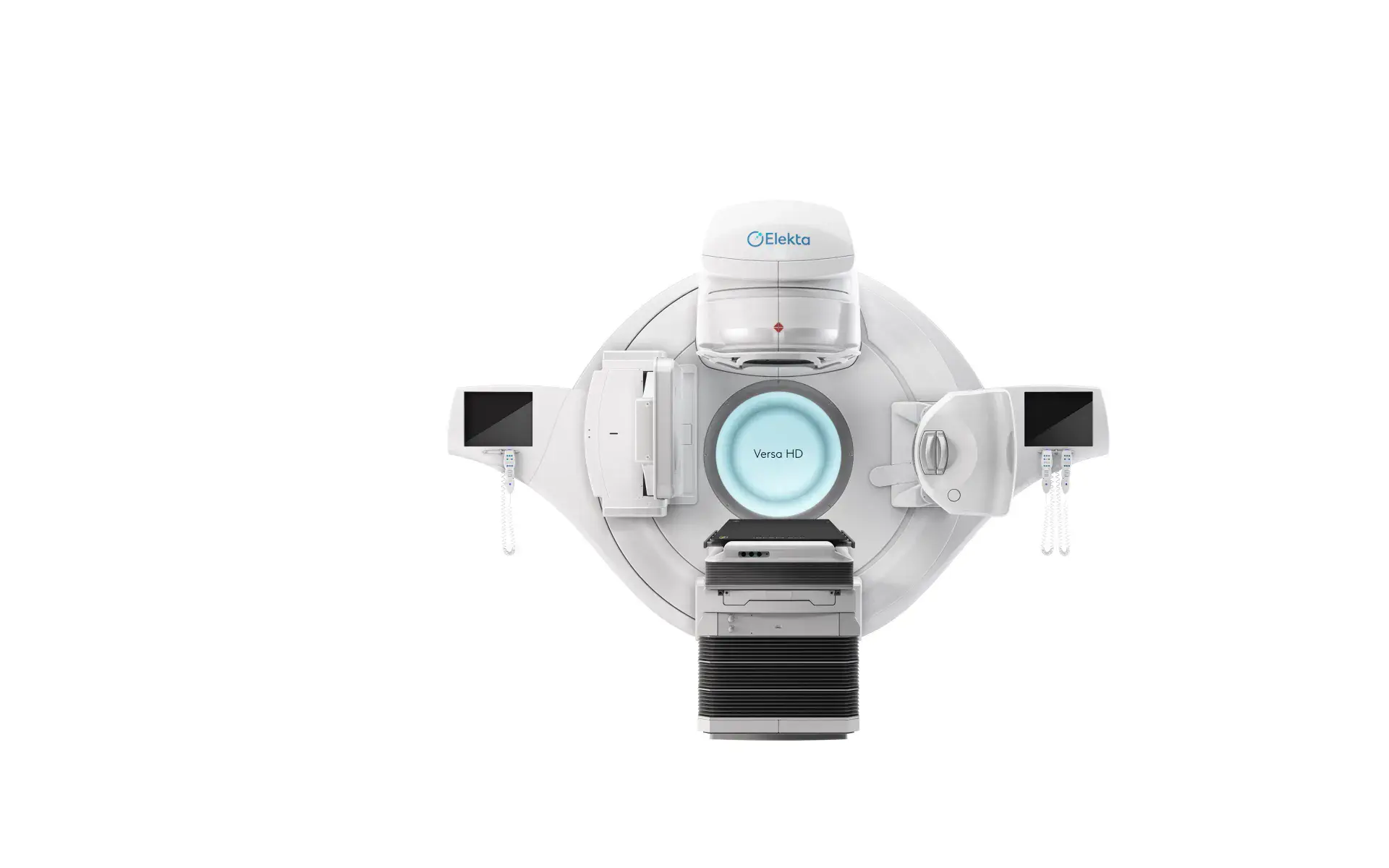
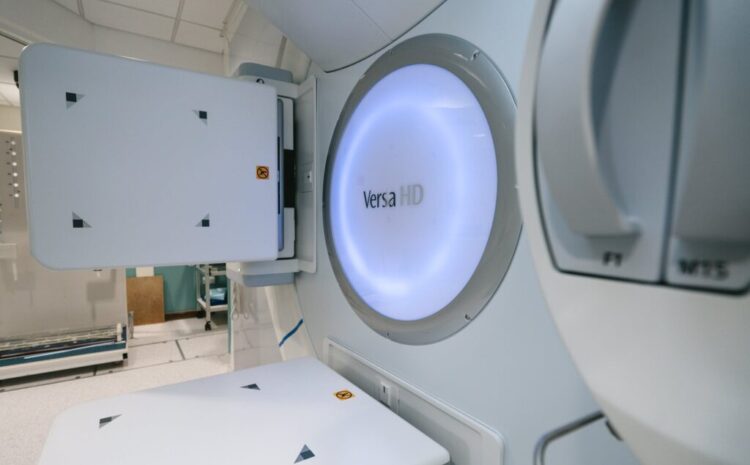
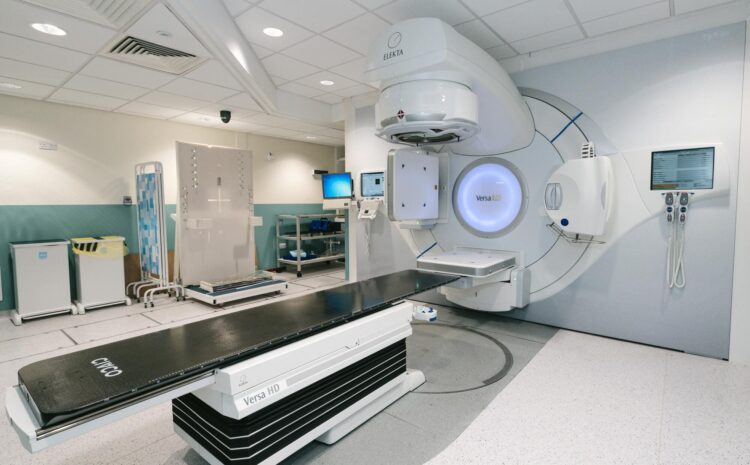
State-of-the-art LINAC

A high-power linear accelerator that generates the radiation of the treatment, with millimetric control in each session.

Advanced dosimetry

We accurately calculate the amount of radiation each area will receive, to maximize the effect on the tumor.

Image-guided radiation therapy

In each session we verify with images to confirm the correct position of the patient. An extra safety step.

Pinpoint precision control

Our technology ensures that radiation reaches the tumor exactly, protecting nearby tissues.

How does it work?

What is the process like?

A structured process to minimise time, guarantee safety and ensure well-coordinated care.

1

First consultation

The patient will meet with our radiation oncology specialist, who will perform a personalized clinical evaluation and review their medical history. During this consultation, the best therapeutic strategy will be defined, as well as the duration of the treatment, the possible side effects and all the details related to the therapeutic process.

2

Clinical assessment and planning

A simulation with a scanner (planning CT) is carried out to obtain the necessary images with respiratory control if necessary and to define exactly the area to be treated and the correct position of the body during the sessions.

3

Personalized therapeutic plan

The team of doctors and radiophysicists designs the personalized treatment plan, defining the most appropriate technique, the dose, the number of sessions and the best way to protect healthy tissues.

4

Treatment

The sessions are outpatient, brief (between 10 and 30 minutes) and generally painless. Before each session we verify the positioning with image to ensure accuracy.

5

Follow-up

Once the treatment is finished, we carry out periodic check-ups to assess the response and detect any eventuality early. You’re not alone in this process.

1

Referral and initial assessment

Clinical evaluation and indication confirmation.

2

CT Simulation

Specific immobilization according to pathology.

3

Personalized planning

Dosimetric calculation and medical validation.

4

Initiation of treatment

Daily monitoring with IGRT (Image Guided Radiotherapy) / SGRT (Surface Guided Radiotherapy).

5

Follow-up during treatment

Weekly clinical monitoring.

6

Discharge and follow-up report

Communication with the specialist who refers the patient.

Comprehensive support throughout the process

In addition to medical treatment, our team is available to answer questions, manage symptoms and accompany you at every stage. Radiotherapy is a path that we travel together.

Our differential value

Why Choose Us?

We combine cutting-edge technology with a people-centred care model.

  • Advanced
    technologyState-of-the-art equipment with millimeter precision control in each treatment session.

  • Agile
    planningFirst preferential visit and initiation of treatment without delay

  • Personalized
    attentionEach treatment plan is designed specifically for the patient, according to the type of tumor, its location and clinical situation.

  • Multidisciplinary
    teamsOncologists, radiophysicists, technicians and specialized nurses work in coordination in each clinical case.

  • Reduced displacement
    Service available in nearby reference hospitals, avoiding long transfers at a delicate time.

  • Hospital
    integrationWe work integrated into the hospital circuit, guaranteeing fluid coordination with the rest of the specialists.

  • Quality and clinical
    safetyWe follow up-to-date international protocols with continuous verification of safety at every stage of treatment.

Where we are

Alliance Medical Centers with Radiotherapy Unit

SAMS Lisbon Clinical Center – Trade Union Healthcare

Hospital SAMS, R. Cidade de Gabela 1, 1849-017 Lisboa

Mon to Sun · 8:00 – 16:00

+351 213 811 961

Hospital Viamed – Tarragona

Hospital Viamed Tarragona, Av. Josep Maria Recasens, 13, 43006 Tarragona, Espanha

Mon-Sun 08:00 to 16:00

+34 977 225 012

Medical area

Information for Physicians

Agile shunt circuit and direct communication with the radiation oncology team.

What do we offer the referring physician?

Our approach to care is based on three fundamental pillars to guarantee excellence in treatment and the peace of mind of the doctor.

Technical precision

Individualized planning with advanced dosimetric calculation systems and daily positioning verification.

Clinical Coordination

Participation in multidisciplinary committees and direct communication with the specialist who refers the patient.

Healthcare agility

Optimized circuit to reduce times between shunting, simulation and treatment start.

Who are we addressing?

Select your profile and we'll guide you through the process

We have two different forms to speed up the process: one for patients who wish to request an appointment directly and another for referring doctors

I'M A PATIENT

Request an appointment

We help you find the most suitable service and center for your case.

Request an appointment online No account required · Instant confirmation
I'M A PATIENT

Refer a patient

Access the referral form and submit the relevant clinical documentation.

Refer a patient online No account required · Instant confirmation
Medical area

Much more than medicine: content for your everyday life

Go to News and Content

Evaluación de GPT-5 para la estadificación del cáncer de esófago

Evaluar si un modelo de lenguaje grande multimodal (GPT-5) puede interpretar imágenes de PET con FDG y ayudar a estadificar el cáncer de esófago, comparando…

Read more

Alliance Medical adquiere las actividades ibéricas de Mercurius Health Group

Alliance Medical, el principal proveedor independiente de servicios de diagnóstico por imagen en Europa, anuncia que ha concluido un acuerdo para adquirir las actividades ibéricas…

Read more

(No) te lo tomes como un hombre

Expresiones como «tómatelo como un hombre» o «sé un hombre» están (todavía) muy presentes en nuestra sociedad. Quizás sin darnos cuenta, al utilizar estas expresiones…

Read more

El Hospital Viamed Tarragona tendrá una Unidad integral de Oncología y Radioterapia avanzada para posicionar la  provincia como referente en el abordaje del cáncer 

El nuevo Hospital Viamed Tarragona se prepara para abrir sus puertas con una firme apuesta por la excelencia asistencial en el ámbito oncológico. Actualmente, se…

Read more

Cáncer de mama

Hay mucho que decir sobre el cáncer de mama. Al ser uno de los cánceres más comunes del mundo, existen libros enteros sobre el tema,…

Read more

Importancia de los datos de radioterapia

La gestión eficaz de los datos médicos es especialmente crítica en radioterapia, ya que los datos son necesarios para cada tratamiento. Sin acceso en línea…

Read more

¿Cómo funciona la radioterapia?

Siendo el objetivo de la radioterapia matar las células cancerosas, permítame que le lleve en un recorrido microscópico por el interior de una sola célula…

Read more

Inteligencia artificial en oncología

La Inteligencia Artificial, también conocida como IA, es el desarrollo de aplicaciones informáticas para realizar tareas que normalmente requieren inteligencia humana, como la comprensión del…

Read more

La ciberseguridad se ha convertido en un problema crítico de seguridad sanitaria tras el creciente número de incidentes de gran repercusión.

La ciberseguridad de los dispositivos médicos es una de las principales preocupaciones actuales. En el entorno médico actual, casi todos los dispositivos médicos incluyen algún…

Read more
Asociaciones

John R. Adler: “Mi objetivo es tratar cada año a más de 4 millones de pacientes que ahora mismo no tienen una opción de tratamiento de radiocirugía”

Madrid, 22 de marzo de 2023. John R. Adler, figura mundial de la radiocirugía, ha visitado España para conocer las instalaciones del Instituto de Radiocirugía Avanzada (IRCA), ubicadas…

Read more

Frequently Asked Questions

No. External radiation therapy is a painless treatment: you don’t feel anything during the session, similar to when you have an X-ray or CT scan. Some side effects may appear over the days, but the timing of the treatment itself is not bothersome.

It depends on the type of tumour, its location and the technique indicated by the medical team. Some treatments are completed in a few sessions, and others are given over several weeks. Each session usually lasts between 10 and 30 minutes, of which only a part corresponds to the administration of radiation; the rest is preparation and positioning.

In most cases no. External radiotherapy is an outpatient treatment: the patient comes to their session and returns home the same day. In in-house treatments, such as brachytherapy, the indications are explained individually before starting.

In external radiation therapy, radiation passes through the body during the session, but the patient is not radioactive and can lead a normal life with their family, including children and pregnant women. In the case of brachytherapy, in which radioactive sources are implanted, some temporary recommendations can be applied that the team will explain in detail.

They vary depending on the area treated and the dose. They are usually local (for example, irritation or redness of the skin in the irradiated area) and some tiredness. Most are temporary and improve after treatment ends. Our team continuously monitors them to prevent and treat them as soon as possible.

In general, yes. Many patients continue with their usual work and activities. We will recommend specific adjustments based on your situation and how you tolerate treatment.

Before starting, a simulation is carried out with a scanner (planning CT) to obtain the necessary images and define exactly the area to be treated and the correct position of the body during the sessions. With these images, the team of oncologists and radiophysicists designs a personalized plan to deliver the dose with maximum precision and protect healthy tissues.

Yes. Radiotherapy is compatible with other cancer treatments and, depending on the case, can be administered before, during or after surgery or chemotherapy. The strategy is defined in a coordinated manner between the specialists involved in your case.

You can contact us directly to request an appointment or, if you prefer, your doctor can refer you through our referral circuit. In both cases, our team will accompany you every step of the way.

Need more information?

Contact our team or request your appointment easily.

This site is registered on wpml.org as a development site. Switch to a production site key to remove this banner.