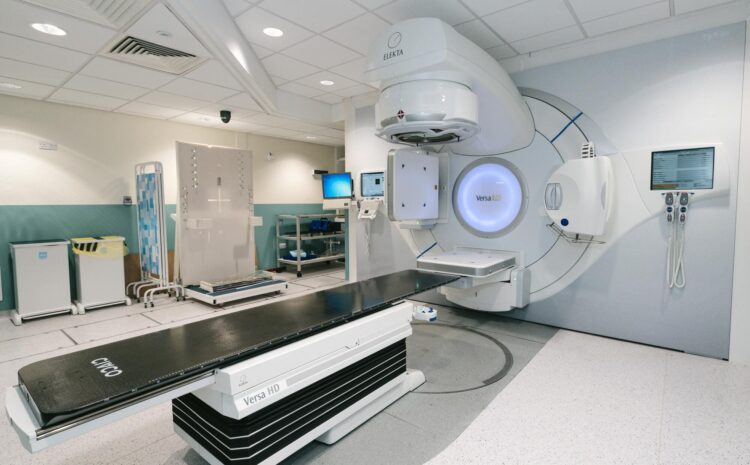
Radiosurgery is a form of radiotherapy. Its main characteristic is being extremely precise. Its goal is to treat brain tumors and functional abnormalities of the brain that cannot be treated with conventional surgery.
The main indications for radiosurgery, grouped by clinical area. If yours does not appear, your case may still be a candidate — we evaluate each indication individually.
Can’t find your pathology?
Each case is unique — our medical committee evaluates the clinical indication individually.
Each treatment is planned individually. Our team selects the most appropriate technique according to the type of tumour, its location and its general health.
What is it?
Stereotactic Radiosurgery (SRS) is an advanced, highly precise radiation therapy technique used to treat benign and malignant brain tumors, as well as specific intracranial abnormalities, without the need for conventional surgery.
It allows for the delivery of high radiation doses with extreme precision to perfectly localized lesions, minimizing exposure and damage to the surrounding healthy tissues. The treatment can be performed in a single session (radiosurgery) or over several fractions, using fractionated stereotactic radiotherapy.
SRS is particularly indicated for small, radiologically well-defined lesions and can be used as an alternative or complement to surgery, especially in patients with higher surgical risk. To ensure maximum precision during the procedure, a customized immobilization system is used to keep the head completely stable throughout the treatment.
We have the most advanced equipment to ensure that each session is as precise, safe, and tailored to each patient as possible. Technology is at the service of your treatment.
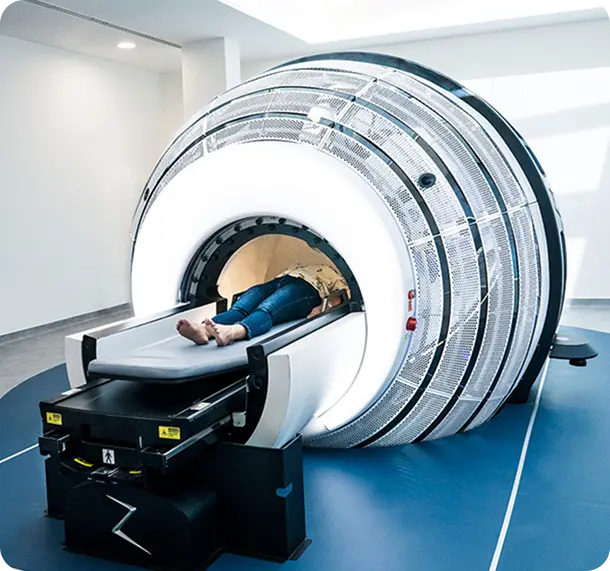
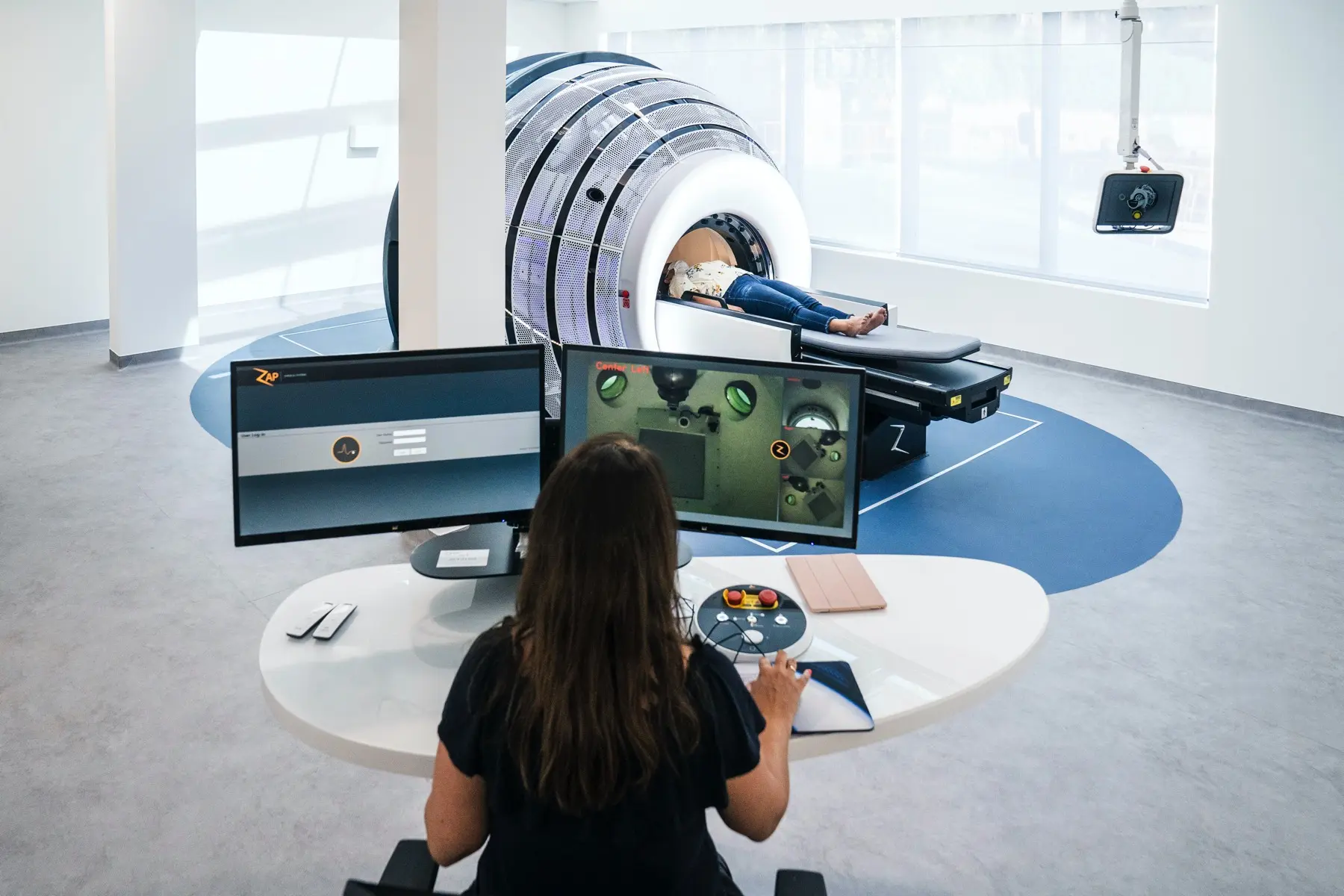
ZAP-X is currently the most advanced stereotactic brain radiosurgery system. It treats benign and malignant lesions of the brain, head, and neck, as well as a wide range of neuro-psychiatric functional pathologies, with high precision, non-invasively, and highly effectively. Unlike other technologies, it is capable of continuously monitoring the radiation dynamics, successfully delivering treatment without damaging the surrounding healthy structures.
A structured process to minimise time, guarantee safety and ensure well-coordinated care.
The patient will meet with the radiation oncology specialist, who will perform a personalized clinical assessment and review the imaging studies and medical history. During this consultation, the indication for radiosurgery and the most appropriate therapeutic strategy for each case will be determined.
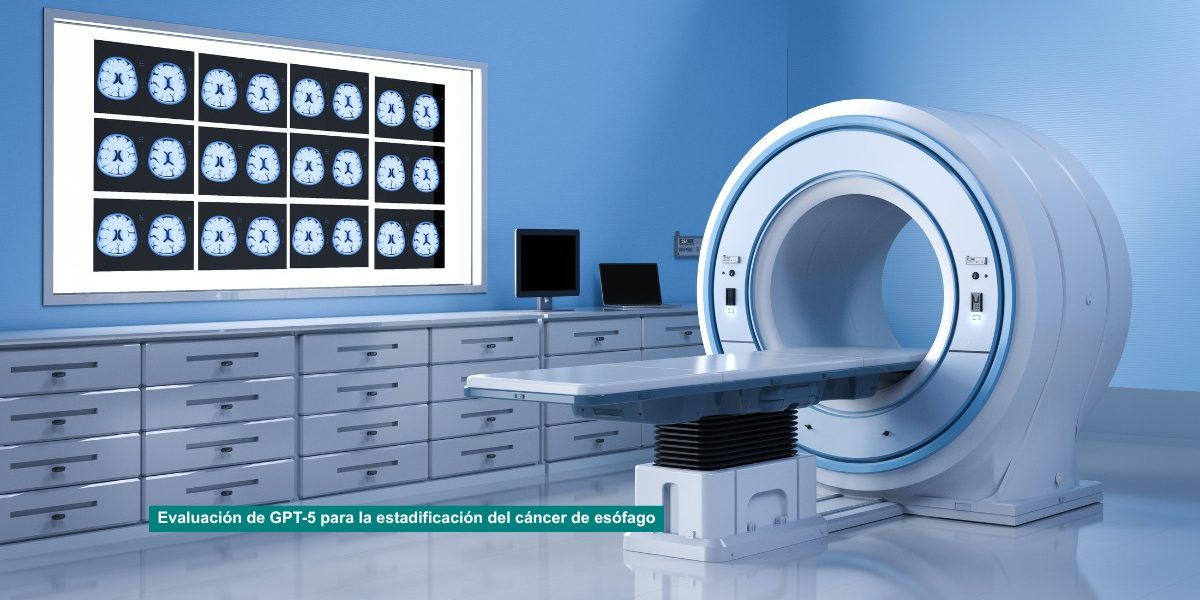
A planning CT scan is performed and, in certain cases, a complementary MRI to locate the lesion to be treated with maximum precision. A personalized immobilization system is also prepared to ensure the stability of the head during treatment.
The multidisciplinary team of radiation oncologists and radiophysicists designs a fully personalised treatment plan, defining the dose, the number of sessions and the best way to protect the surrounding healthy tissues.
Radiosurgery is an outpatient, non-invasive, and usually painless procedure. The treatment is usually performed in a single session or in a few short sessions, using advanced image verification systems to ensure millimetric accuracy.
After finishing treatment, clinical controls and periodic imaging tests are carried out to evaluate the therapeutic response and monitor the patient’s evolution throughout the process.
Clinical evaluation of the patient, review of imaging tests, and confirmation of the indication for stereotactic radiosurgery.
Performing planning CT scans and, when necessary, complementary MRI. Preparation of the customized cranial immobilization system to ensure maximum precision during treatment.
Design of the therapeutic plan by the radiation oncology and radiophysics team, including dosimetric calculation, dose definition and medical validation.
Treatment administration using high-precision radiosurgery, with advanced image verification and control systems to ensure pinpoint accuracy in each session.
Clinical assessment and monitoring of the patient’s evolution after treatment, as well as control of therapeutic response and possible side effects.
Issuance of clinical report and communication with the referring specialist to ensure coordinated follow-up of the patient.
Comprehensive support throughout the process
In addition to medical treatment, our team is available to answer questions, manage symptoms and accompany you at every stage. Radiotherapy is a path that we travel together.
We combine cutting-edge technology with a people-centred care model.
Only team in Spain
IRCA has the only Zap-X in Spain. There are only 10 in the world and 4 of them in Europe.
Minimally invasive technology
ZAP-X is painless, does not require anesthesia, and is applied on an outpatient basis. The patient goes home in the day.
Innovation and avant-garde
The Zap-X is a commitment to innovation as it allows us to continue advancing in the world of radiosurgery. IRCA always at the forefront.
Comprehensive and quality care for international patients
We perform personalized medical evaluations for international patients, reviewing their history and clinical reports or conducting a complete study from scratch. Our multidisciplinary team offers specialized diagnoses, therapeutic guidance and medical second opinions with a comprehensive and expert approach.
We have two separate forms to streamline the process: one for referring physicians and another for patients who wish to request an appointment directly.
We help you find the most suitable service and center for your case.
Request an appointment online No account required · Instant confirmationAccess the referral form and submit the relevant clinical documentation.
Refer a patient online No account required · Instant confirmationRadiosurgery is a form of radiation therapy. Its defining characteristic is being extremely precise.
Its objective is to treat brain tumors and functional brain abnormalities that cannot be treated with conventional surgery.
It is also known as stereotaxic radiosurgery or stereotactic radiosurgery.
Although radiosurgery contains the word “surgery” within it, it is not a surgical procedure. Precisely, it is an alternative for patients who cannot undergo surgery due to the location of the lesion.
Both terms are used in the same way, although it is suggested to use only the word “estereotáctica” in Spanish.
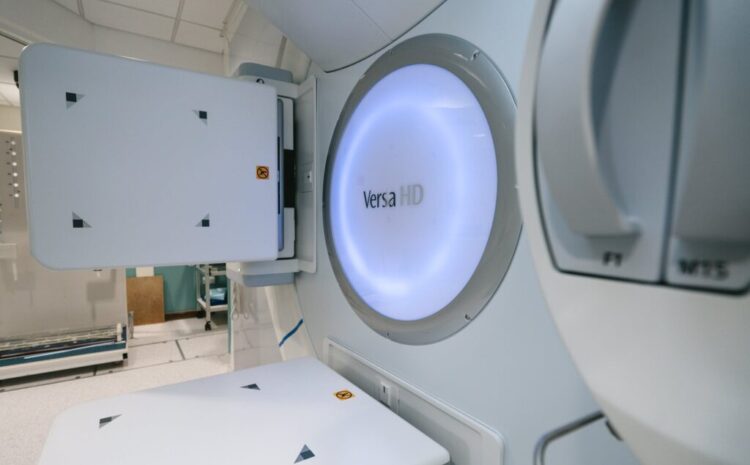
Radiosurgery requires high-tech equipment to deliver radiation to the damaged area with a minimal margin of error.
Currently, IRCA possesses the most advanced stereotactic radiosurgery system, ZAP-X technology.
Unlike other technologies, ZAP-X technology is capable of continuously monitoring radiation dynamics, ensuring much more effectively that the healthy structures surrounding the lesion are not damaged.
Intracranial radiosurgery is used to treat various types of brain or intracranial conditions, including:
Our treatment for trigeminal pain is a milestone in radiosurgery. It is a viable and effective option that not only offers a lasting solution to the pain, but also avoids the adverse side effects associated with opioid analgesics and other invasive procedures.
Initially, the location of the lesion must be unequivocally identified by determining its exact coordinates.
To achieve this, stereotactic imaging tests such as CT (computed axial tomography) and angiography are performed, complemented by magnetic resonance imaging, to determine the precise location and size of the brain lesion to be treated.
One of the major advantages of the ZAP-X technology we have at IRCA is that it leaves behind the classic placement of the stereotactic frame.
This frame consisted of a ring fixed to the skull with screws, which served as a reference point to target the radiation beams at the treatment site and stabilize the head.
With the technology available at IRCA, there is no need to pin any device to the patient’s head.
By doing so, we eliminate the unpleasant effects associated with placing a traditional stereotactic frame around the head:
The treatment is painless, outpatient, and takes place in a bright, open space with windows, which prevents claustrophobic feelings.
During the treatment, thin beams of ionizing radiation produced from cobalt are applied from multiple entry points.
The advantage of the ZAP-X technology we use at IRCA is that it is more advanced than the traditional cobalt-60 system (Gamma Knife) or other particle accelerators. It does not require isolation deep inside a concrete bunker, requires no anesthesia, and is completely painless and non-invasive—all achieved in a single session.
Through all of this, we succeed in making the entire process deeply human.
Contact our team or request your appointment easily.